
Villa renovation approvals in Dubai: what you need, who issues it, and how long it takes
If you're renovating a villa in Dubai, you'll almost certainly need approval before work starts. Usually that's at least two layers: a no-objection certificate (NOC) from your community's master developer, and a permit from the authority that covers your area. Very occasionally DEWA or Civil Defence get involved too, but that's rare. Plan for around six weeks and it's straightforward. Get it wrong and you're looking at stop-work notices, fines, or ripping out finished work.
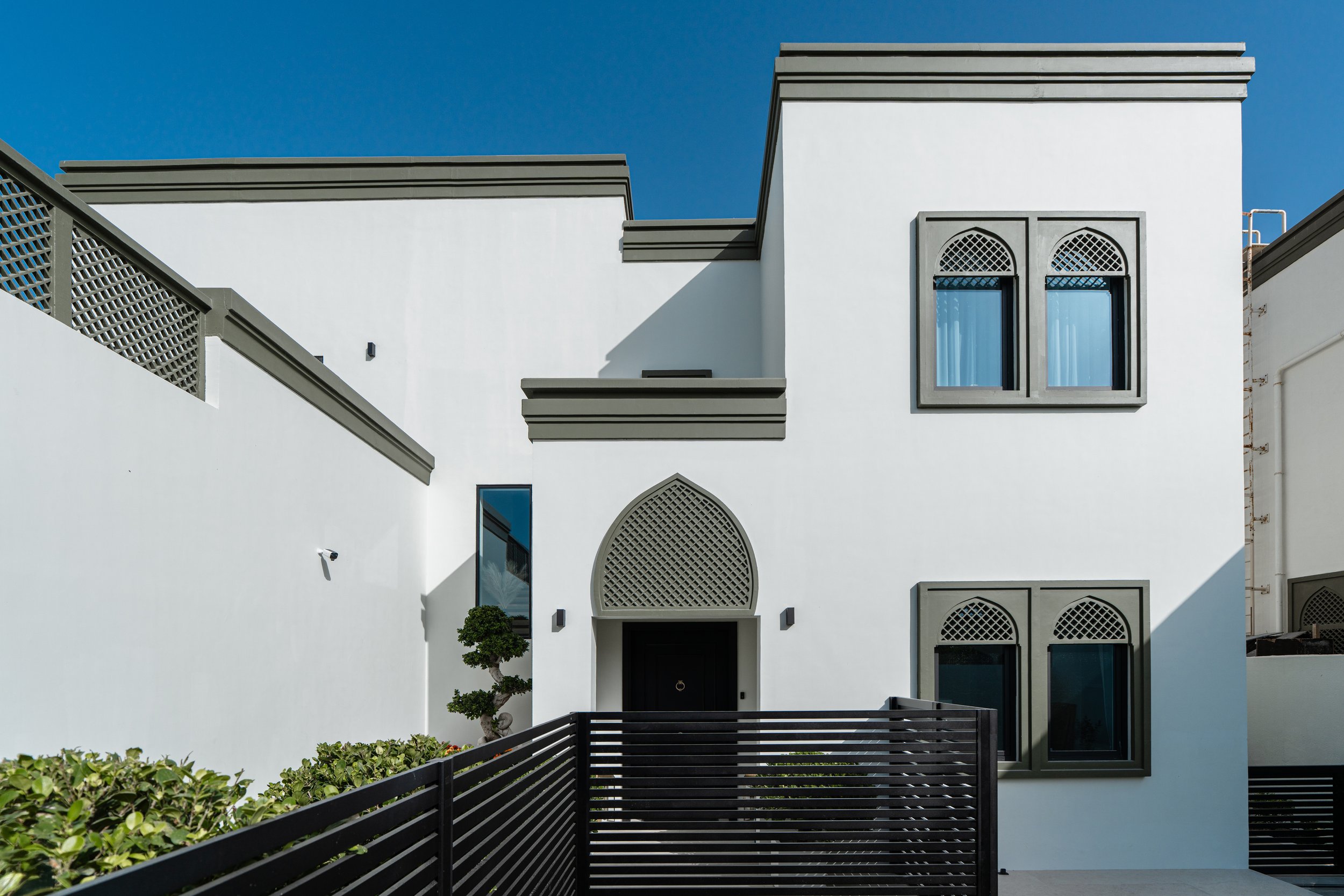
We handle approvals in-house on every project, so here's how it actually works.
Do I need approval at all?
For anything beyond basic maintenance, assume yes. Routine work like interior painting, AC servicing and minor repairs normally doesn't need an NOC, though your contractor will still need a community access permit. But kitchens, bathrooms, pools, pergolas, landscaping, extensions and anything structural generally do. Emaar, for example, requires a home modification NOC for kitchen and bathroom renovations, and even for soft landscaping.
The rule of thumb: if it changes the structure, the services (electrics, plumbing, drainage, AC), or anything visible from outside, it needs approval.
Step 1: your master developer's NOC
Every villa community has design guidelines, and the master developer's NOC confirms your plans follow them. This is where most renovations start.
Emaar communities (Arabian Ranches, The Lakes, The Meadows, The Springs): apply through the Emaar Community Management (ECM) portal under "Home Modifications". Exterior changes are tightly controlled. Boundary walls can't be raised, for example, and pergolas and exterior paint must match community standards.
Nakheel communities (such as Jumeirah Park and Al Furjan): apply to Nakheel. Modifications are assessed case by case, and extensions can carry significant fees on top of the application.
Damac Hills: approvals go through LOAMS, Damac's community management company.
Al Barari: Al Barari handles its own approvals directly.
The developer will want drawings, a scope of work and contractor details. Some also take a refundable security deposit against damage to common areas.
Step 2: the authority permit
Once the developer's happy, the authority that governs your area issues the actual building or modification permit. In Dubai that's usually one of two:
Dubai Municipality covers most residential communities. Applications go through its online building permit system and need drawings prepared by a registered consultant.
Trakhees (part of the Ports, Customs and Free Zone Corporation) covers certain areas, including many Nakheel communities. It issues a modification permit with approved drawings that must stay on site while work is going on.
Which one applies depends on your community, not on the size of the job. It's the first thing we check.
Rarely needed: DEWA and Civil Defence
DEWA comes in if you're significantly changing your electrical load or water connections.
Dubai Civil Defence may be needed for fire and life-safety elements on larger projects.
In practice, it's rare for a villa renovation to need either. If yours does, we'll flag it at the very start so it's built into the timeline.
Structural changes: where the engineering comes in
Removing or moving walls, opening up a kitchen, adding a floor or an extension all need structural drawings and calculations from a licensed engineer before any authority will look at them. This is where a lot of renovations get stuck: the design is agreed, the client is excited, and then nobody has checked whether that wall is load-bearing.
We have structural engineering in-house, so the structural drawings are done alongside the design rather than after it.

How long does it all take?
Here's what we typically see:
Developer NOC: as little as one week, up to two.
Authority permit: ten working days at the very minimum. It usually comes back with comments to address, so it can run to around four weeks.
What we tell clients to plan for: six weeks for the full approvals process, from first submission to permit in hand.
Six weeks sounds like a long time to wait, but it doesn't have to be dead time. We use it to finalise the design, order long-lead items like joinery and stone, and line up the site team, so work starts properly the day the permit lands.
The biggest causes of delay we see:
Incomplete drawings, or drawings that don't match the developer's guidelines
Starting design before checking what the community actually allows
Structural details missing from the first submission
Applying to the wrong authority
What happens if you skip it?
Unapproved work can lead to fines, stop-work orders and being made to reverse the changes at your own cost. It also tends to surface when you sell, because developers can inspect the property before issuing the NOC a sale needs.

What we'd do
Check approvals before you fall in love with a design. The best renovations we've done started with a simple question: what does this community allow, and which authority signs it off? Answer that first, and the design, the engineering and the paperwork all line up.
That's why we keep design, structural engineering and approvals under one roof. Nobody's waiting on somebody else's drawings.
Planning a villa renovation in Dubai? Book a consultation and we'll tell you exactly which approvals your project needs before you spend a dirham on design. Or see how we handle structural engineering and approvals.